Preparing Your Outdoor Living Space for Winter: Deck & Patio Care Guide
Fall in Virginia is hard to beat. The mornings are crisp, the leaves are turning, and your deck or patio is probably getting its best use of the year. It's also the right moment to get that space ready for what's next.
Winters in Northern Virginia are not the harshest in the country, but they are tough on outdoor structures. Our region swings between freezing nights and mild afternoons, with rain, sleet, and occasional heavy snow. That freeze-thaw cycle is what does the damage. Water seeps into small cracks, freezes, expands, and quietly widens them.
At Jackson's Company, we've built and repaired decks, porches, and outdoor living spaces across Fairfax, Prince William, Loudoun, Fauquier, Culpeper, and Stafford Counties, as well as the Lake Anna area, for more than 25 years. Here is the checklist we'd follow at our own homes.
Start With a Thorough Cleaning
Leaves, pine needles, and dirt hold moisture against your decking all winter. On a wood deck, that moisture invites rot, mildew, and mold. On composite decking, it feeds surface staining and slippery algae.
Sweep the surface and clear debris from the gaps between boards with a putty knife or a thin scraper.
Wash the deck with a cleaner made for your decking material. Wood, pressure-treated lumber, and composite brands like Trex each have their own care instructions, so check before you scrub.
Go easy with a pressure washer. Too much pressure can splinter wood and scar composite. Use a wide fan tip and keep it moving.
Clean under and around the structure. Pull out leaves and clutter from beneath the deck so air can circulate.
Then let everything dry fully before sealing or storing.
Inspect Before the First Freeze
A cold-weather inspection is the best way to catch a small problem before it becomes a big repair bill. Walk the whole deck and look closely at these spots:
Fasteners: Look for nails or screws that have worked loose or popped up. They're a trip hazard and a path for water.
Railings and stairs: Push on every post and rail. Fix anything wobbly before snow and ice make the stairs more hazardous.
The ledger board: This is where the deck attaches to your house. Check for gaps, staining, or soft spots, and confirm the flashing is intact. A failing ledger is a serious safety issue.
Posts and framing: Poke suspect wood with a screwdriver. If it sinks in easily, you may have rot.
Cracked or splintered boards: Replace damaged boards now so water can't work its way in.
If you find sagging, movement, or soft framing, don't wait for spring. Those are signs to call a professional. A deck that's weak in October can fail under a heavy snow load in February.
Seal or Stain Wood While the Weather Cooperates
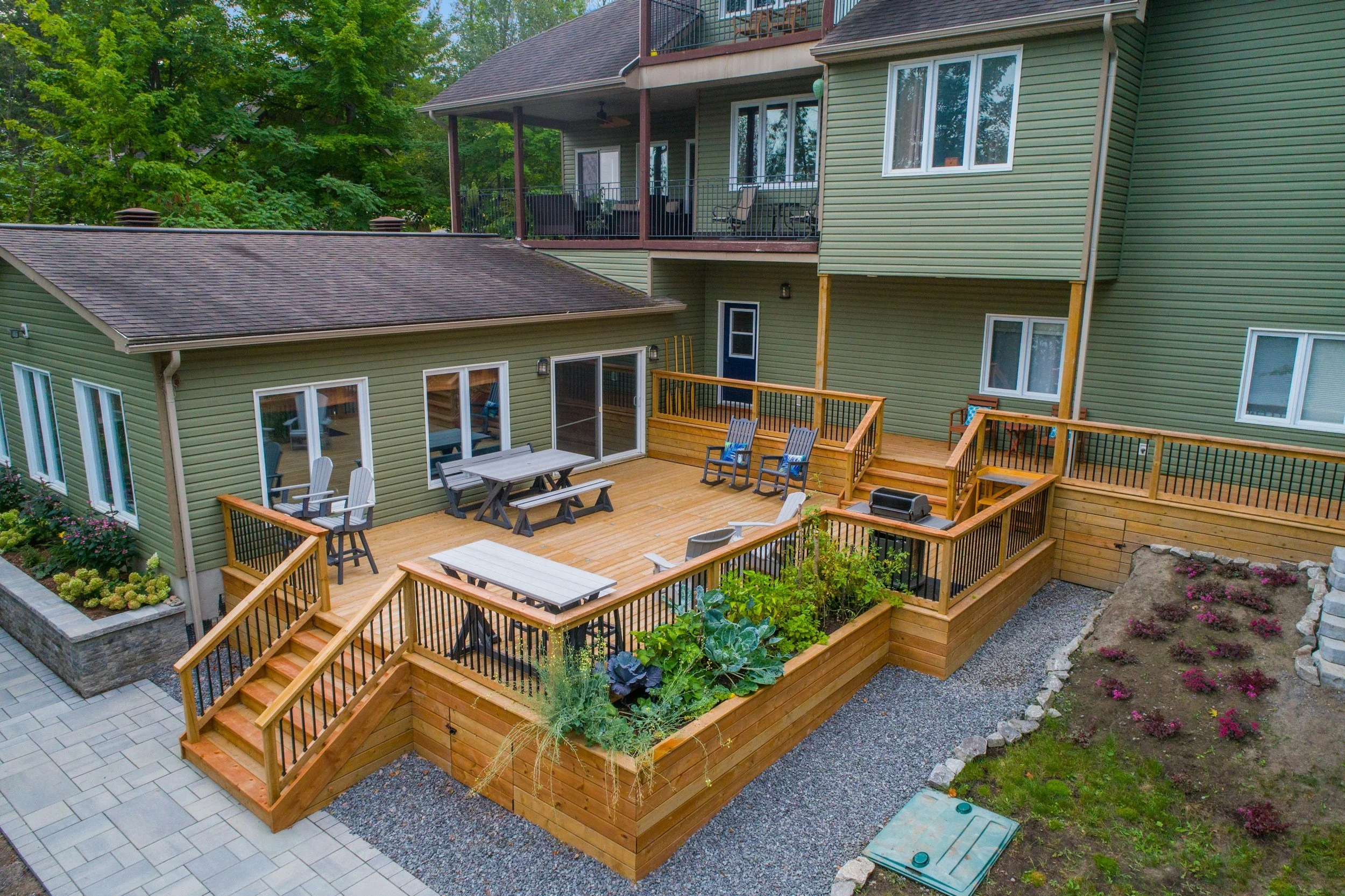
If you have a wood deck, a fresh coat of water-repellent sealer or stain is your best defense against moisture. The catch is timing. Most products need dry weather and temperatures generally above 50°F during application and for a day or two after. In our area, mid to late October often gives you a few good days, but the window closes quickly.
Make sure the deck is clean and completely dry first. Newly built pressure-treated lumber often needs several weeks to dry out before it will accept a finish, so follow the manufacturer's guidance. If the weather doesn't cooperate, it's better to skip this step than to seal over damp wood.
Composite decking doesn't need sealing, which is one reason homeowners love it.
Prepare Your Patio
Patios face the same freeze-thaw cycles, just in different ways.
Paver patios: Check for settled, shifting, or uneven pavers, and fix them now before ice exaggerates the problem. Sweep fresh jointing sand into the gaps to keep pavers locked in place and discourage weeds. In dry weather, a quality paver sealer helps repel water and protect color.
Poured concrete: Look for hairline cracks and seal them before water gets in. A concrete sealer adds another layer of protection against moisture and de-icing salts.
Flagstone and natural stone: Clear away debris, check for loose stones, and make sure water drains away rather than pooling.
In every case, watch where water goes. Standing water on a patio can lead to winter problems. Make sure your gutters and downspouts carry runoff away from the patio and your foundation.
Protect Furniture, Grills, and Fixtures
Store or cover cushions. Bring cushions and umbrellas indoors, or put them in a waterproof storage bin.
Use breathable covers. Heavy plastic traps moisture. A breathable, fitted cover protects furniture without encouraging mildew.
Winterize the grill and outdoor kitchen. Shut off propane, clean grates, and cover the unit. If you have an outdoor sink or water line, drain it completely to prevent pipes from freezing and bursting.
Disconnect hoses and shut off exterior spigots to protect your plumbing.
Plan for Snow and Ice
When winter weather arrives, a few habits go a long way.
Shovel soon after snowfall. Snow that melts and refreezes turns into ice, and a thick load adds weight to your deck. Use a plastic shovel and push along the length of the boards, not across them.
Skip the metal blade. Metal shovels can gouge wood and scratch composite.
Be careful with rock salt. Standard rock salt can damage concrete, pavers, and metal fasteners. Sand or a de-icer labeled safe for your surface is a better choice.
Keep stairs and railings clear. Slips on icy steps are among the most common winter injuries at home.
When to Call a Contractor
Routine care you can handle yourself. Structural concerns are different. Bring in a licensed contractor if you notice:
A deck pulling away from the house
Soft, rotted, or crumbling framing
Loose or wobbly railings and stairs
Patio pavers that have sunk or heaved
Persistent drainage problems around your outdoor space
Repairing these issues before they worsen is usually less expensive than waiting until spring. Winter is also a smart time to plan a new build, since booking early secures your spot on the spring schedule. If you're still weighing your options, our guide on deck vs. patio for your Northern Virginia backyard is a good place to start.
A Little Work Now Pays Off in Spring
A few hours this fall can add years to your deck or patio. Clean it, inspect it, seal it, and protect your furniture, and you can enjoy the first warm weekend of spring instead of doing repairs.
Let Jackson's Company Help
Want a professional set of eyes on your deck before the cold sets in? Jackson's Company is a licensed, bonded, and insured general contractor based in Culpeper, serving homeowners across Northern and Central Virginia. We handle deck and porch repairs, replacements, and new construction, plus year-round property maintenance to keep your home in shape.
Ready to get started? Request a free estimate or call Tom Whitley at (540) 812-2089.